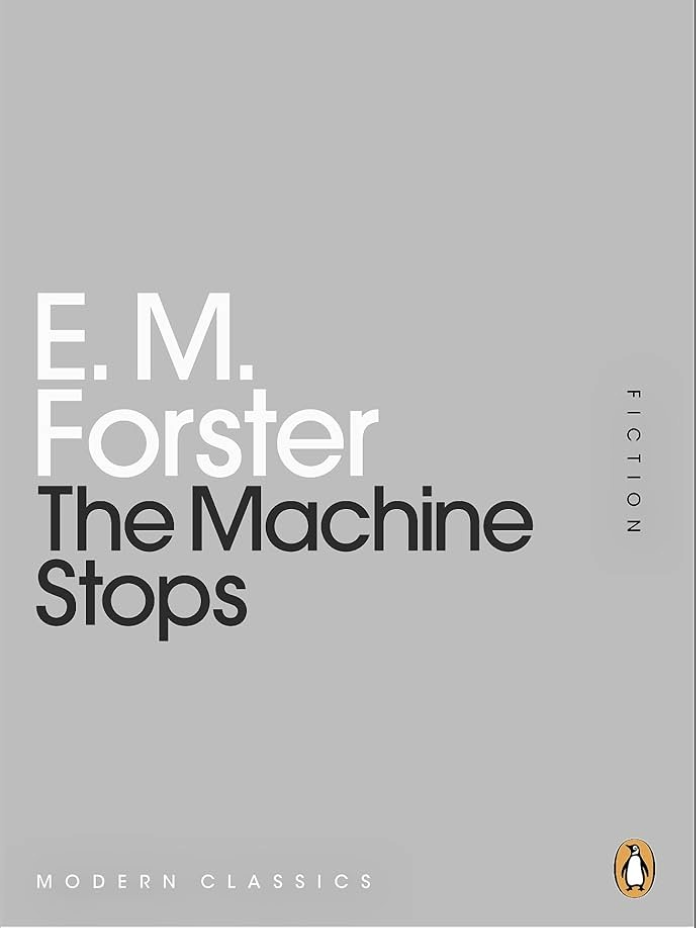
In 1909, a bloke called E. M. Forster wrote a short story about a future in which people lived alone in small underground rooms, communicated through screens and relied on an enormous machine to provide everything they needed.
They rarely met face to face, showed little interest in travel and increasingly understood the world through information rather than direct experience.
Sound familiar?
The story was called The Machine Stops, and what makes it so extraordinary isn’t simply how much Forster appeared to predict. It’s what he understood about human nature.
We love convenience. We love things that make our lives easier. And when something works well enough, we tend to stop questioning it.
Until, of course, it stops working.
More than a century later, as we race to automate just about everything, I wonder whether Forster’s greatest insight wasn’t about technology at all. Perhaps it was about what happens to us when we become too dependent on it.
When convenience becomes dependency
Think about how much of our lives we’ve already handed over to technology.
We don’t need to remember phone numbers, navigate without GPS, visit a shop or even speak to another human being to get most things done. We have instant access to more information than any generation in history, and AI is now making it possible to produce, analyse and communicate at a speed that would have seemed unimaginable just a few years ago.
And much of this is brilliant. I’m certainly not advocating a return to fax machines and the Yellow Pages.
But there’s a difference between technology making us more capable and technology making us less capable of functioning without it.
Forster’s characters don’t lose their independence overnight. They gradually surrender it, one convenience at a time, until they’ve forgotten how to live without the Machine.
It’s an uncomfortable thought when you consider how enthusiastically we’re embracing the next generation of technology.
Are we using these extraordinary tools to expand what we’re capable of, or are we slowly outsourcing the very things that make us capable in the first place?
What happens when we stop learning the craft?
Take recruitment.
We’re developing technology that can source candidates, write job adverts, identify prospects, conduct initial screening, generate outreach messages and automate enormous parts of the recruitment process.
For an industry that has spent decades wrestling with repetitive administration and inefficient processes, the opportunities are immense.
But there’s something I’ve been wondering about.
If technology does all the searching, writes all the messages, handles the initial conversations and increasingly recommends who should be hired, how does the next generation of recruiters actually learn to recruit?
The question isn’t whether recruiters should spend their lives searching databases and writing endless outreach messages. Of course they shouldn’t. It’s whether we’re giving them enough opportunity to develop the judgement, curiosity and human understanding that separates a great recruiter from someone who simply knows how to operate the technology.
You can automate a process. Developing genuine expertise is a different matter.
Those skills are built through experience, mistakes, difficult conversations and thousands of interactions with other human beings. AI can certainly help people learn, and removing repetitive work could create more time for developing those skills, but that depends on what we choose to do with the time we save.
If the objective is simply to process more candidates, send more messages and generate more activity, we might end up with an industry that’s extraordinarily efficient at doing things everyone else can do equally well.
And when everyone has access to the same technology, what really makes one recruitment business different from another?
Perhaps the advantage will increasingly lie in the very human capabilities we’re at risk of neglecting.

More connected. Less connected?
There’s another aspect of Forster’s story that I find particularly interesting.
The people in his imagined world are constantly communicating. They exchange ideas, attend lectures and interact with others through their screens, yet genuine human relationships have become increasingly distant.
They can reach almost anyone and yet barely know anyone.
It’s difficult not to see parallels with the world we’re creating.
We can connect with thousands of people on LinkedIn, attend virtual events from our bedrooms and communicate with someone on the other side of the planet in seconds. These are wonderful things, and they’ve opened doors that previous generations could barely have imagined.
Yet there’s something about sitting opposite someone, sharing a meal or having an unexpected conversation that technology struggles to replicate.
I see it whenever we bring recruitment business owners together. Someone arrives with a problem they’ve been wrestling with for months, gets chatting to another owner over lunch and suddenly sees things differently.
No algorithm. No elaborate process. Just two people having a conversation.
Technology has made it possible to build communities across geographical boundaries that once seemed impossible. But perhaps we should be asking whether we’re using that connectivity to create more meaningful human experiences or allowing it to become a substitute for them.
There’s a rather important difference.
The real opportunity
For a fundamentally non-technologist, I love technology. I love what AI is making possible, and I genuinely believe it has the potential to transform how we work and build businesses.
But I’m increasingly interested in what we do with the freedom it promises to create.
If AI takes care of the repetitive stuff, brilliant. That should give us more time to build relationships, develop our people, think creatively and enjoy life beyond work.
Yet I wonder whether we’ll simply raise our expectations, increase our output and fill every spare minute with another task.
Forster imagined a civilisation that had become so dependent on its technology that when the Machine finally stopped, humanity could no longer function without it.
More than a century later, perhaps the question isn’t how much more we can automate, but what we want to preserve.
If the Machine stopped tomorrow, how much of what makes you good at your job would still be there?